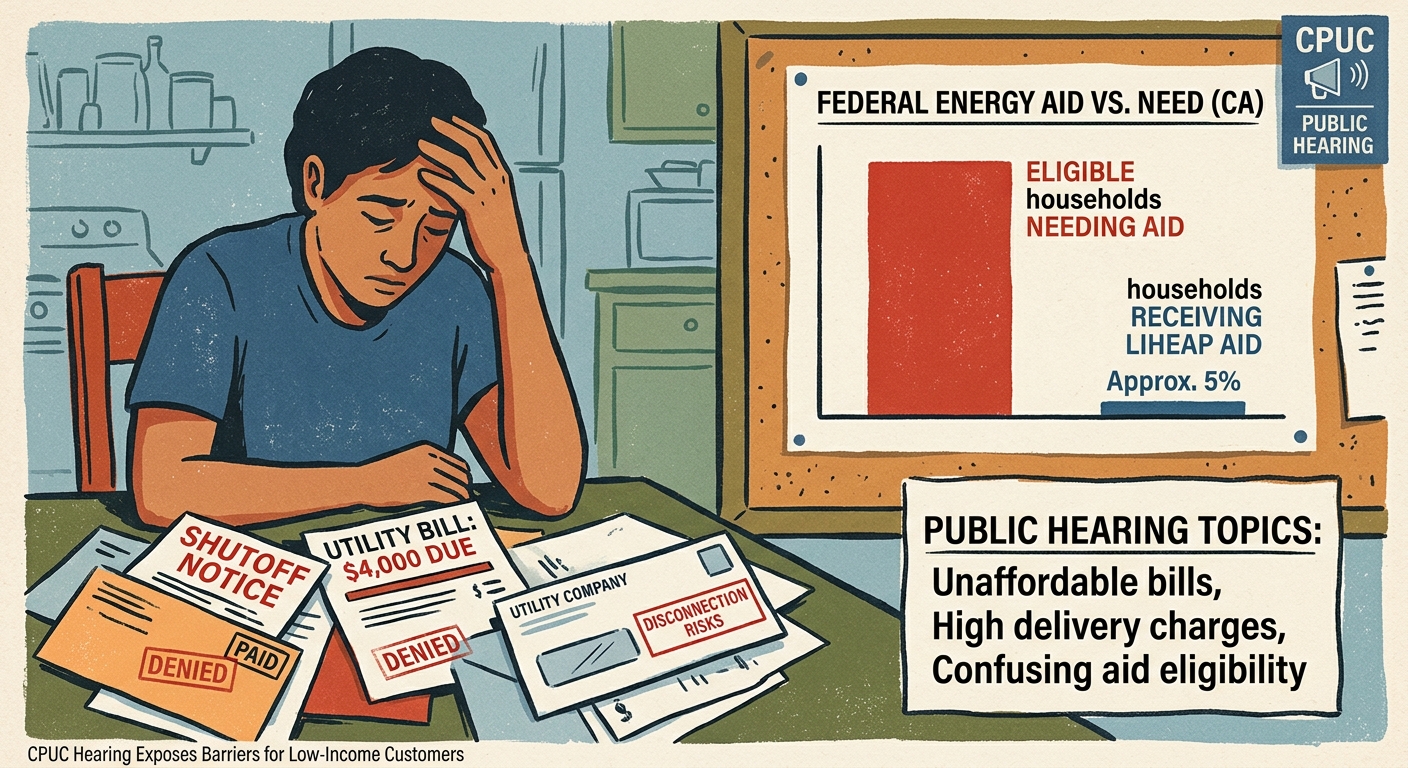
At an Aug. 6 public hearing on disconnection protections, speakers described a utility system in which customers are struggling to keep up with bills, payment plans and shutoff notices — and a nonprofit representative said access to federal energy aid remains far below need.
In remarks during the California Public Utilities Commission hearing, a nonprofit speaker said LIHEAP funding has fallen and that only about 5% of eligible Californians can get assistance, according to the hearing summary. The hearing was held as part of the commission’s disconnections protections proceeding, rulemaking 1807-005 (the CPUC transcript summary identifies the proceeding as focused on disconnection protections and energy affordability).
The hearing also featured extensive testimony from customers who said utility bills, estimated charges and payment plans were leaving them at risk of disconnection. One speaker said a utility bill had climbed to about $15,000 and that the minimum payment arrangement they were offered was $4,000 a month, while others described repeated shutoffs, large back bills, meter problems and confusing eligibility rules for assistance programs.
Several speakers urged the commission to preserve or expand aid programs such as CARE, PIPP, AMP and REACH. Others argued that eligibility rules — including gross-income thresholds — keep help out of reach for households that appear to qualify on paper but cannot access aid in practice.
The commission’s hearing summary says the public comments focused heavily on unaffordable bills, high delivery charges, disconnection threats and the difficulty of navigating assistance programs before a shutoff happens. The judge also reminded callers that the CPUC Consumer Affairs Branch can help with billing and service questions.
The hearing did not produce a policy change. But the testimony offered a public record snapshot of how California households are experiencing the state’s utility-aid system: eligible in theory, but often unable to get help before debt and disconnection notices pile up.