LOS ANGELES — LA28 outlined several planned ways for arts groups and residents to participate in its Cultural Olympiad during an Oct. 14 California legislative hearing, while lawmakers pressed for local participation, affordability and benefits that extend beyond the 2028 Games.
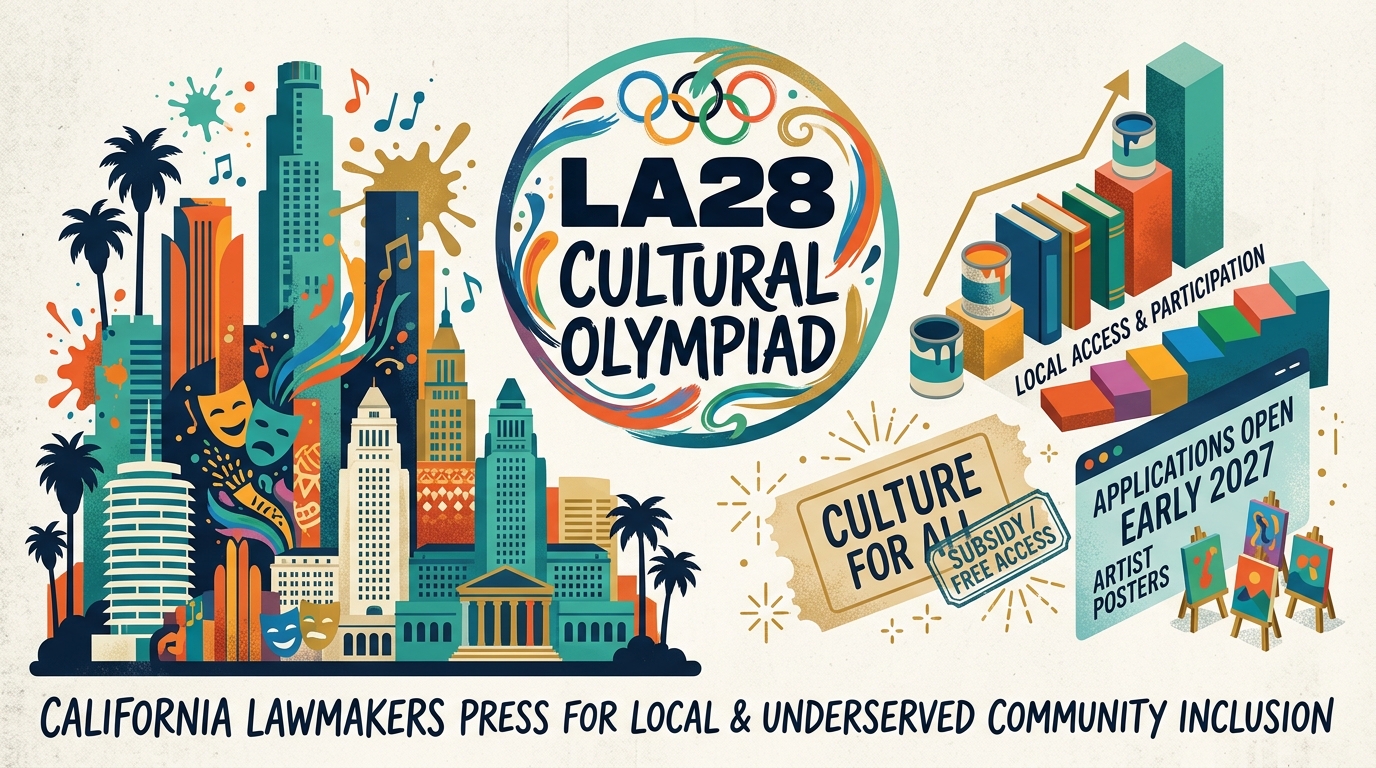
Dwayne Jones, LA28’s senior vice president for the Cultural Olympiad and stakeholder events, said the organizing committee plans to open applications in early 2027 for an official Cultural Olympiad mark. The online process is intended for institutions, nonprofit groups and others presenting programming across the greater Los Angeles region, he said. LA28 is still working with city and county partners on the criteria and application questions.
LA28 also plans a web-based calendar and mapping platform to make Cultural Olympiad programming easier for residents and visitors to find. The committee said the platform would include programming associated with the Cultural Olympiad and highlight cultural activity across the region, including in smaller neighborhoods.
Another planned element, called “Culture for All,” would provide funding to offset ticket costs for institutions and small nonprofit organizations whose programs might otherwise be out of reach for some residents. LA28 officials said the initiative is intended to lower ticket prices without requiring participating organizations to absorb the loss, but they did not provide eligibility rules or a subsidy amount at the hearing.
The committee also described an official art poster project. Curators from across the region nominated more than 100 artists, from which eight Olympic and eight Paralympic posters were selected, according to LA28’s presentation. The artists’ identities are expected to be announced in July 2027.
Lawmakers said the program’s success should be measured by whether local artists, small arts organizations and historically underserved communities can participate and benefit. Assemblymember Tina McKinnor, chair of the Los Angeles County Legislative Delegation, asked how much funding would be dedicated to the Cultural Olympiad and how the effort would reach community-based organizations. She also asked how Black communities and other historically underserved communities would be included in planning and programming.
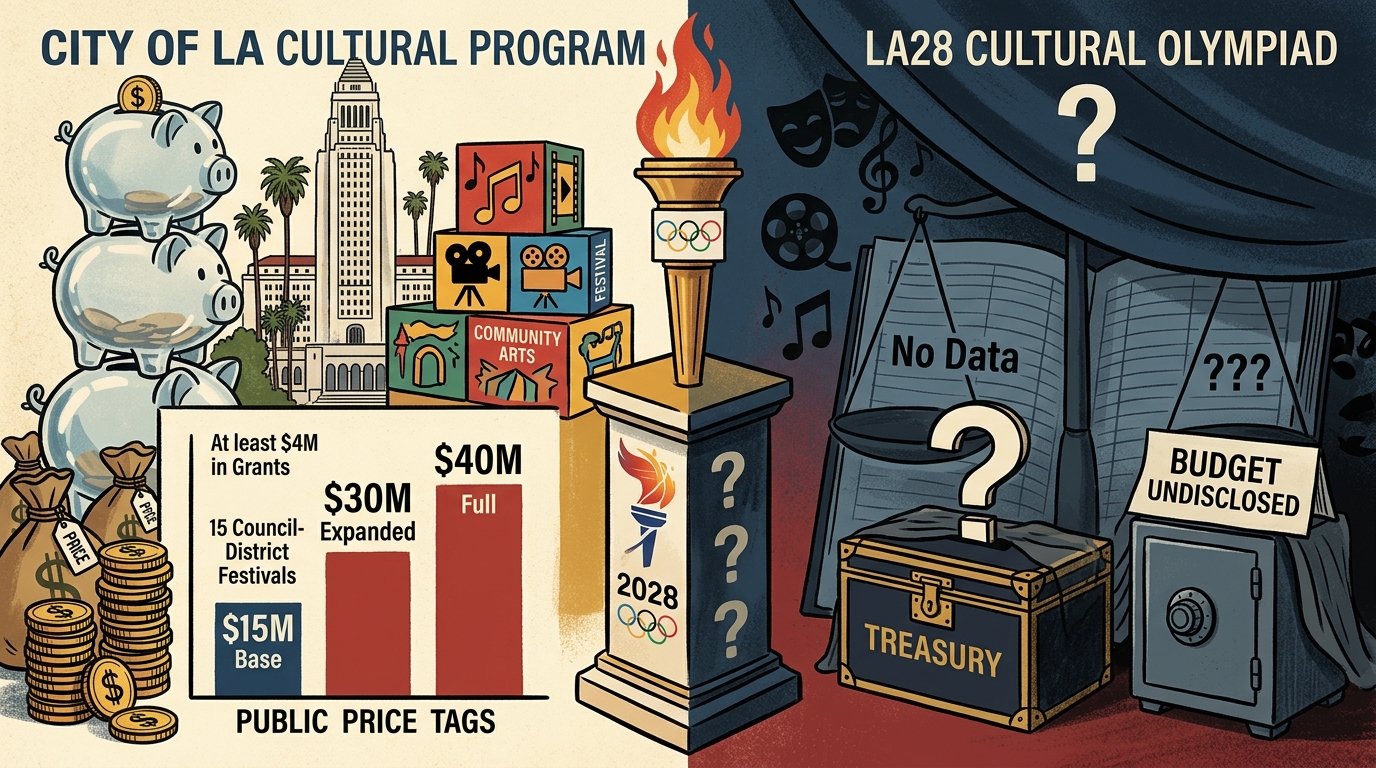
The hearing record does not establish final application criteria, participation targets, accessibility standards, a total Cultural Olympiad budget or the size of any Culture for All assistance. LA28’s presentation also ended before all testimony and commitments were available in the record. Those details are expected to be important tests when the early-2027 application guidance and budget information are released.