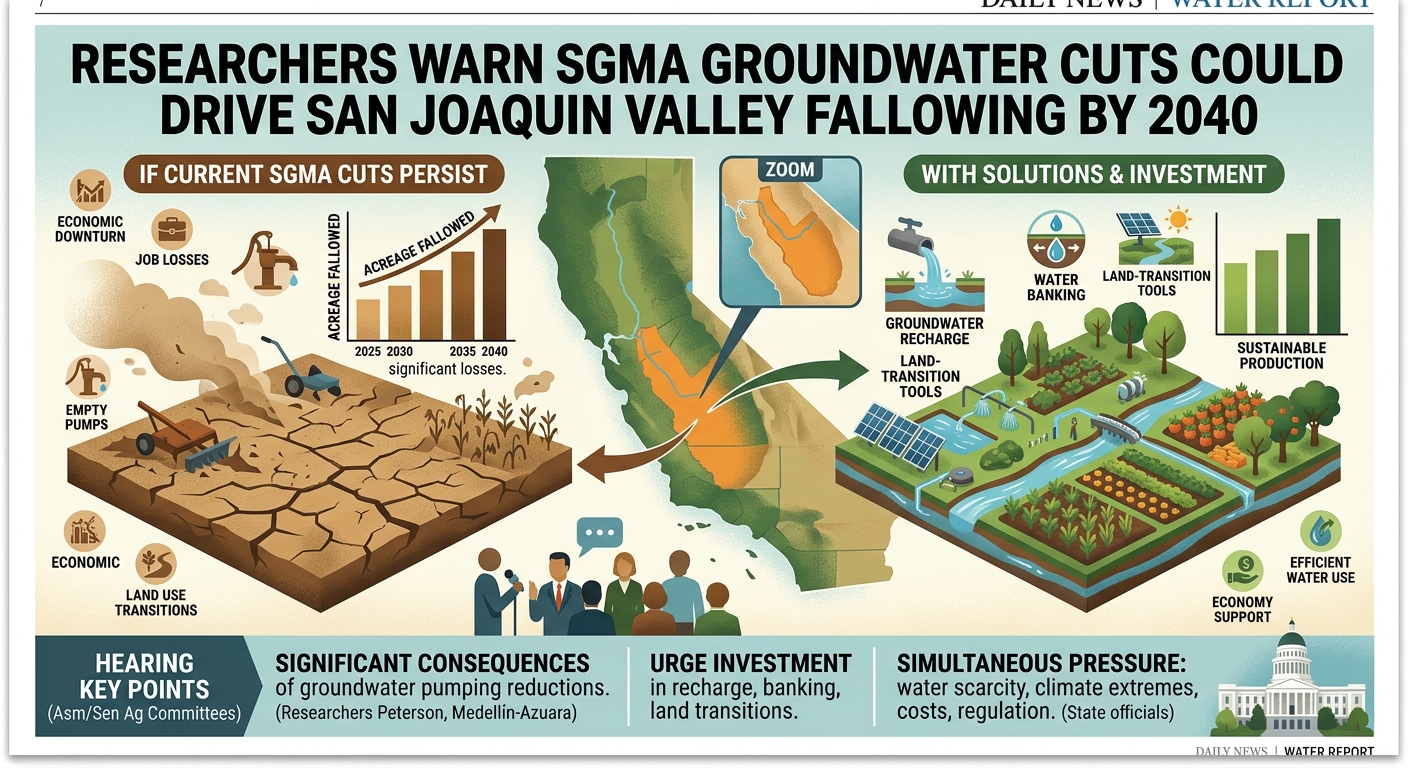
Researchers warned California lawmakers Tuesday that groundwater reductions required under the Sustainable Groundwater Management Act could force major fallowing in the San Joaquin Valley by 2040 unless the state expands recharge, banking and land-transition tools.
At a joint hearing of the Assembly and Senate agriculture committees, Public Policy Institute of California researcher Caitlin Peterson and UC Merced professor José Medellín-Azuara said the region faces significant consequences if groundwater pumping keeps coming down on the current timetable. The hearing summary says their presentation linked SGMA-driven cuts to large acreage losses, and that they urged more investment in recharge and transitions to other land uses.
Department of Water Resources officials also used the hearing to discuss how Proposition 4 guidance, recharge, banking, conveyance and the 2028 water plan update could shape future funding and implementation. DWR Director Thomas Gibson and Deputy Director Paul Goslin described groundwater sustainability, flood management and subsidence as central planning issues.
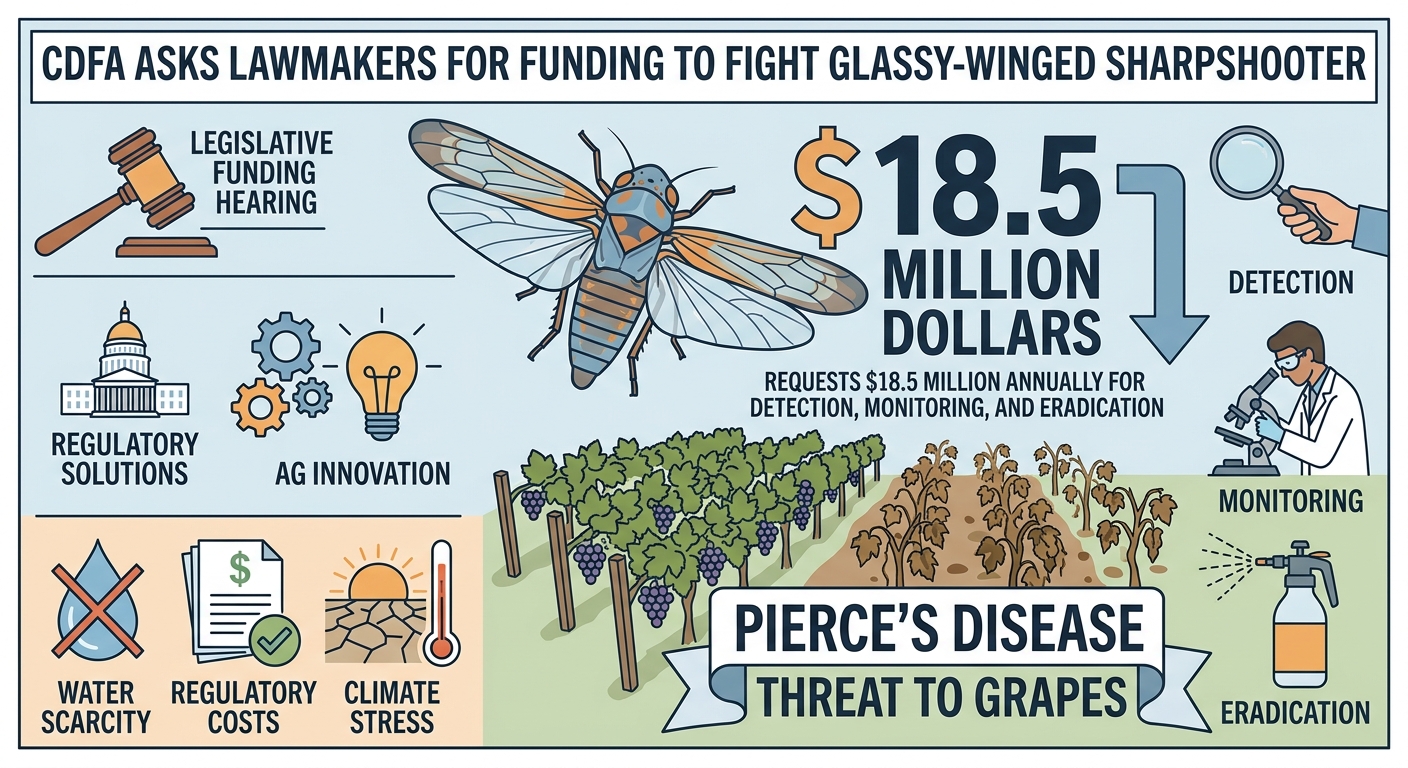
The hearing featured a broader warning from state agriculture and water officials that California’s farm economy is facing simultaneous pressure from water scarcity, climate extremes, labor costs, regulations and pest threats. But the clearest policy signal came from the water researchers, who said the state will need more than mandated groundwater cuts if it wants to avoid widespread land fallowing in the San Joaquin Valley.